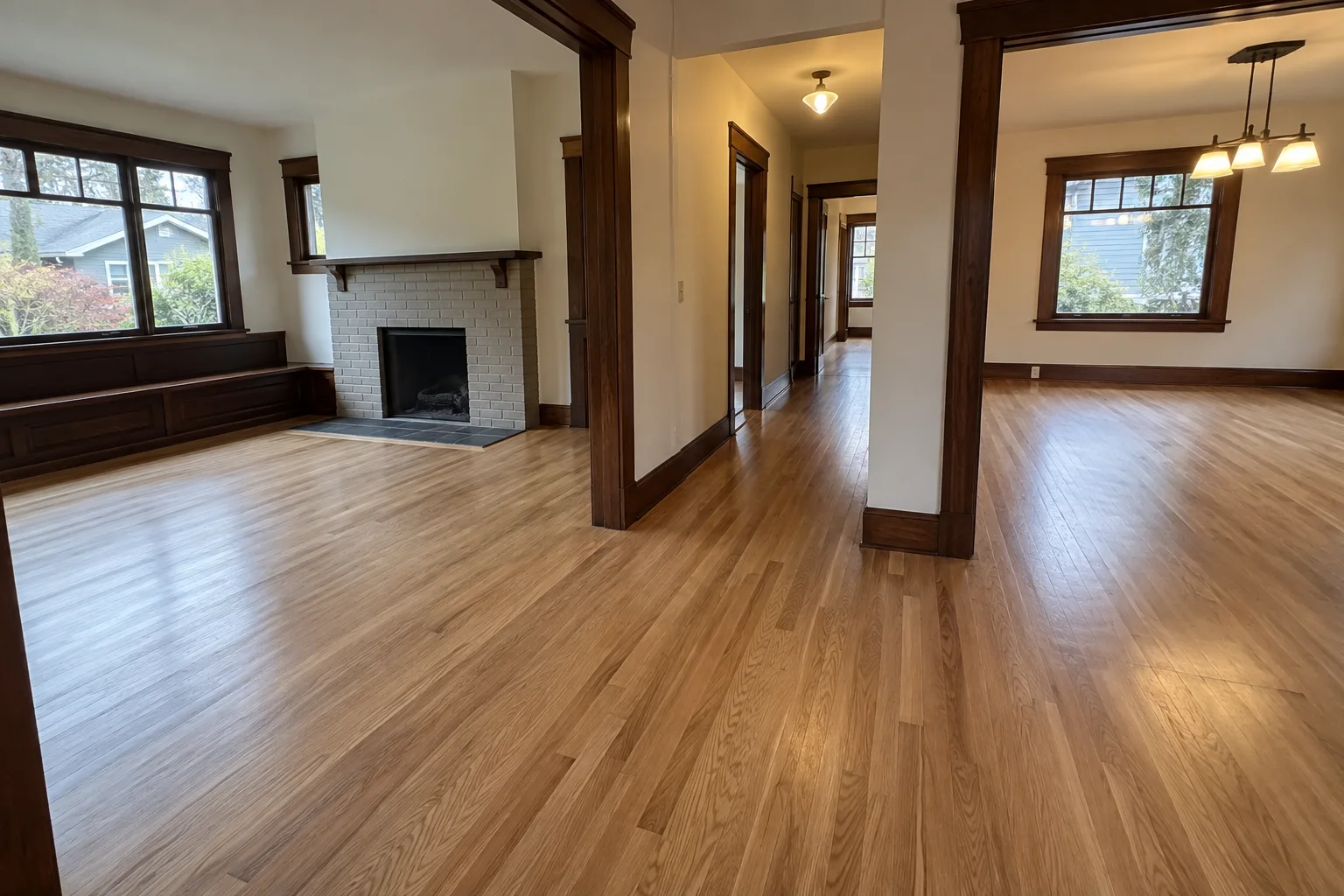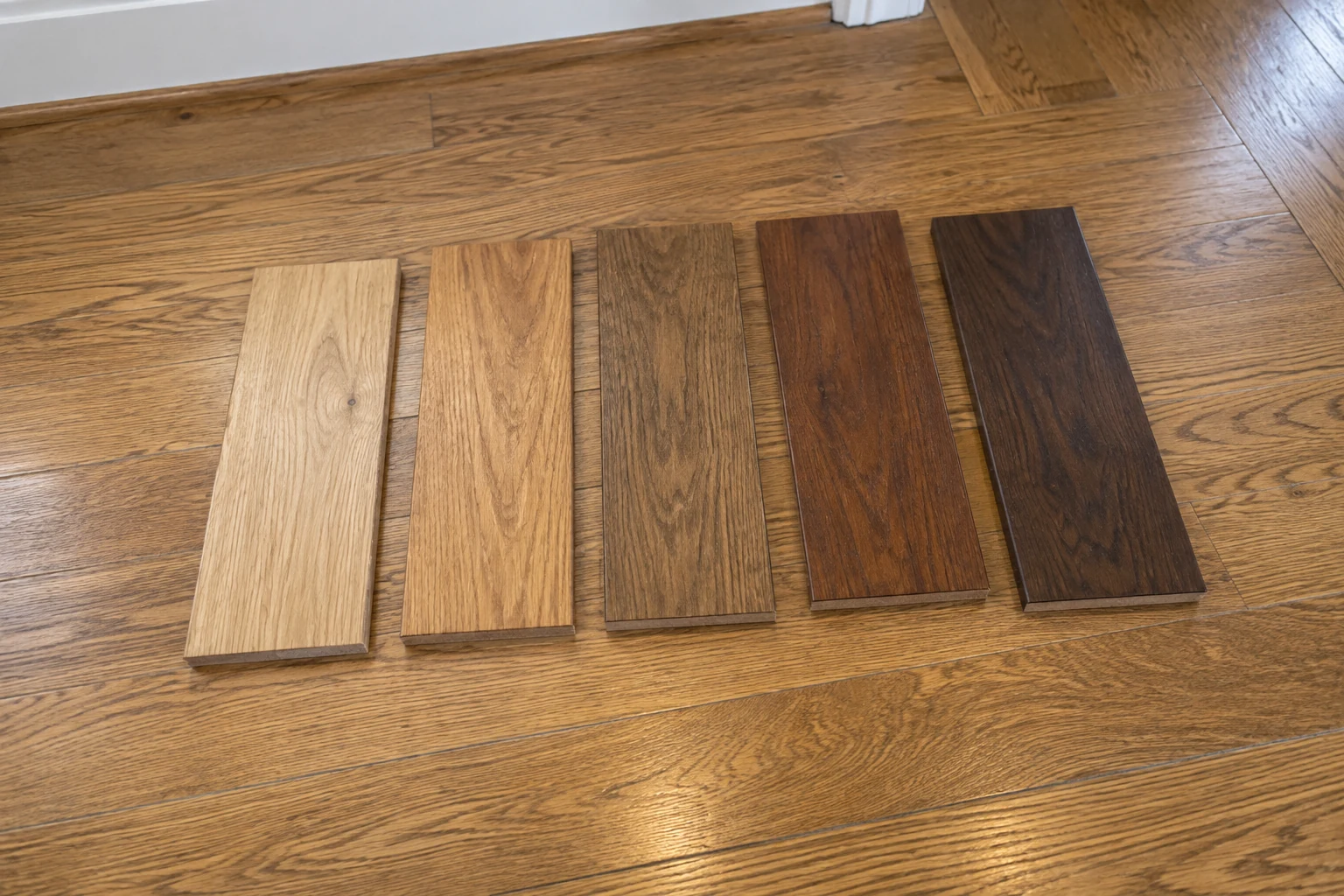
View prepared wood samples in your room before choosing a stain. Compare the color with the planned sealer and topcoat, then decide how much shine you want. Bring reference photos to explain your preferences and approve the result from a physical sample.
Decide what the floor needs to coordinate with
Start with the parts of the room you plan to keep: cabinets, trim, doors, stone, and adjoining floors. Pick a small set of reference images and name what you like about each: a pale color, visible grain, brown tone, or soft reflection.
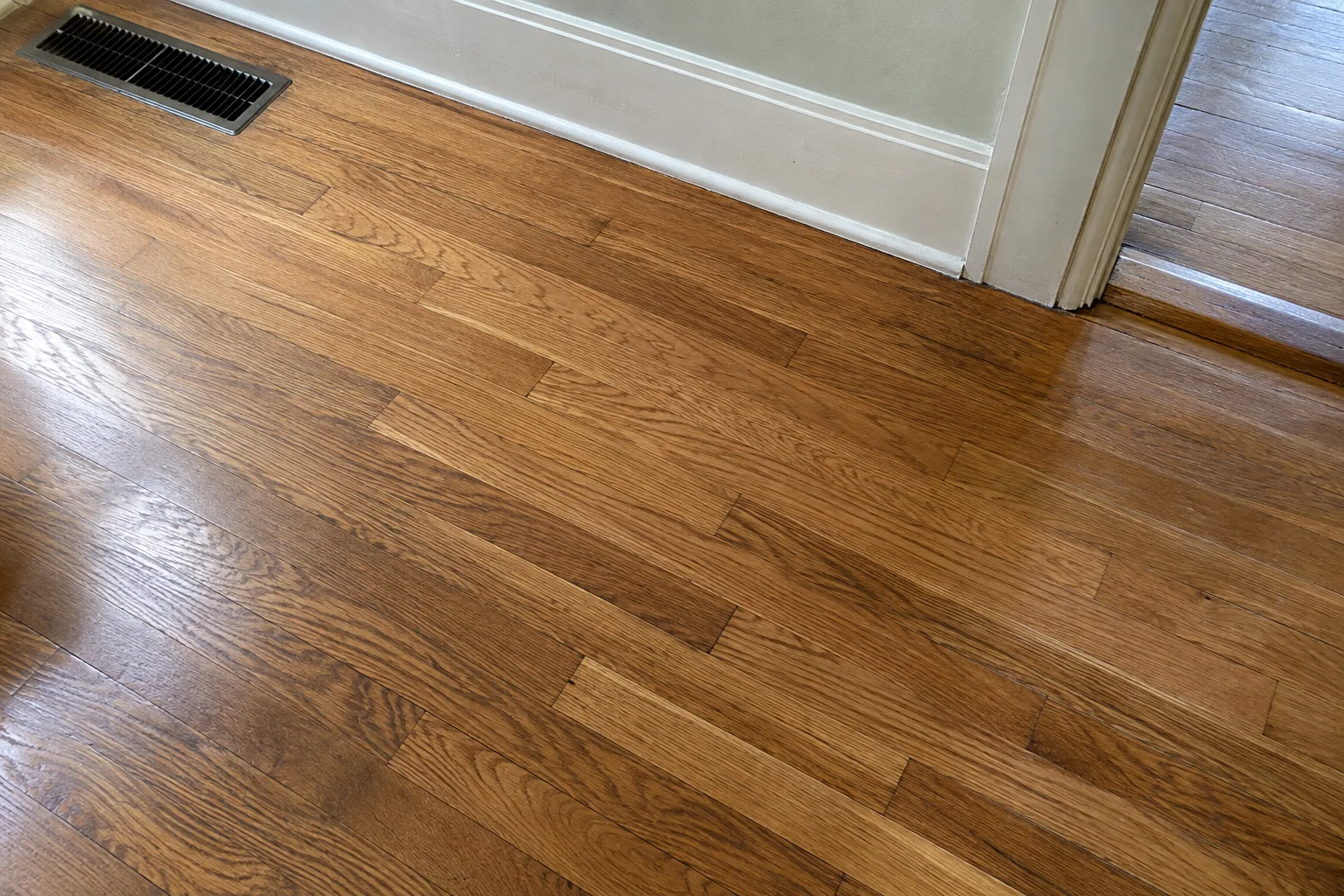
For a repair or addition, identify the exact floor you want to match. Point out where new boards will meet old ones, whether at a doorway or in the middle of an open room. Review those spots when discussing color and finish matching.
Ask for samples that represent the planned work
Ask your contractor to make samples with the wood, preparation method, sealer, and topcoat planned for the job. In its Chroma color brochure, Bona notes that displayed colors vary with the screen, wood species, and finish, and that preparation affects color. Treat online swatches as a starting point for choosing samples.
Keep the shortlist manageable. Include an unstained option if you like the wood's natural color, and ask what that option will look like with the chosen protective finish. If your contractor will add new boards, compare samples on both the existing and replacement material.
Review the samples where you will live with them
- Place movable samples beside the cabinets, trim, and adjoining floor.
- Look in daylight and with your evening lighting.
- Step back to a doorway and compare the color from standing height.
- Check both the face of the boards and the reflections across them.
- Write down what needs to change before requesting another sample.
Photograph your shortlist to keep track of the options. Arrange the sample review with your contractor before work begins, and make sure the person approving the color can attend.
Compare sheen samples in the same color
Sheen describes how much light the finish reflects. Matte reflects less; satin adds more reflection; semi-gloss and gloss give a shinier appearance. NWFA explains that lower sheen makes small scratches and normal wear less noticeable in its wood-floor finish guide. You can still scratch a matte floor.
Compare available sheens within the finish system your contractor recommends. Ask about the product's care requirements and suitability for the room as well as its appearance. Compare sheen samples in the same color so you can judge the reflection without a change in tone.
Record what you approve
Keep a record of the approved sample, stain name or custom blend, sealer, finish, and sheen. Confirm which rooms it applies to and any expected variation between old and new boards. Ask to retain a labeled sample when practical.
Talk to us about stain samples for your floor. If a refinish is part of the plan, use the home-preparation checklist to organize access and timing around the work.