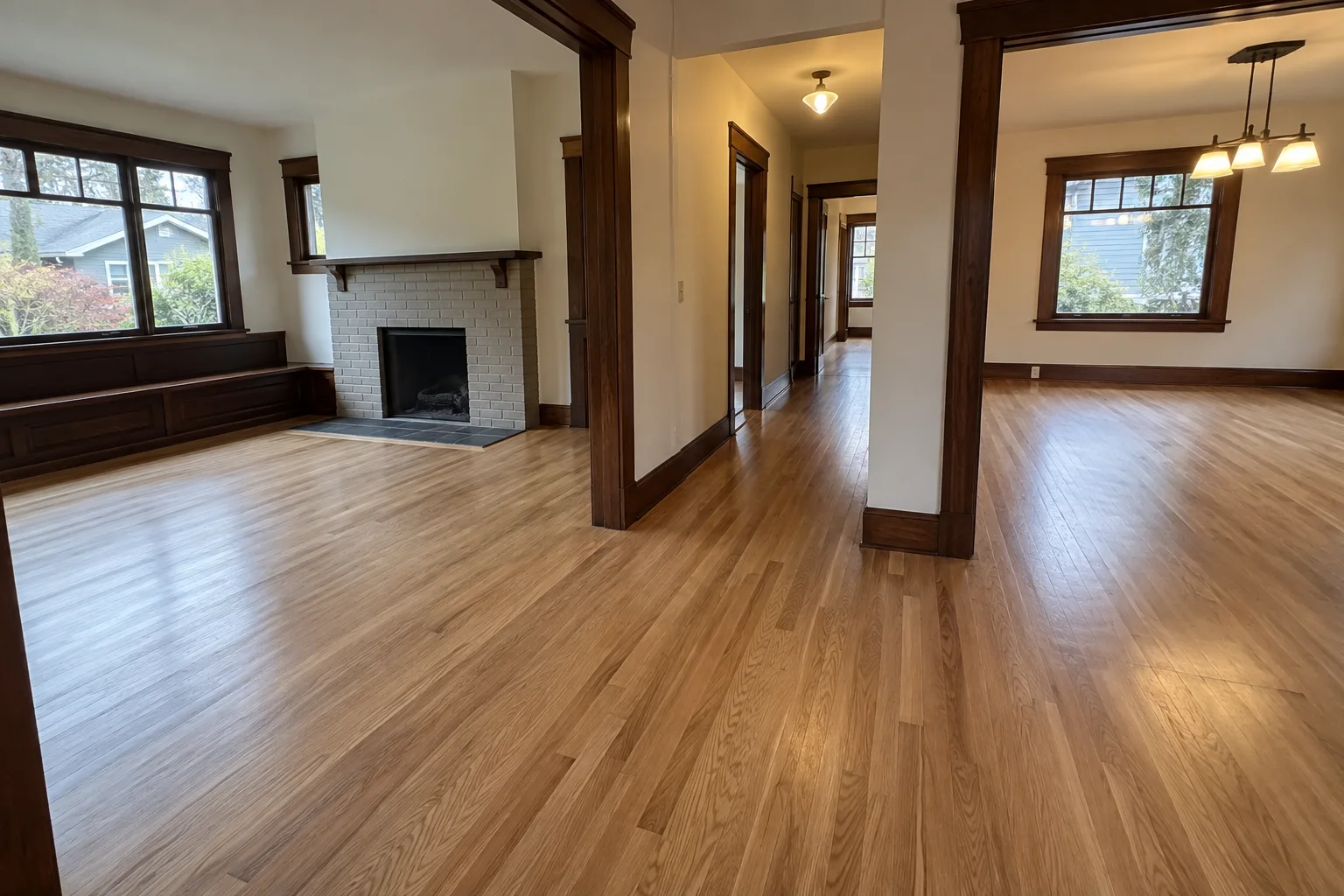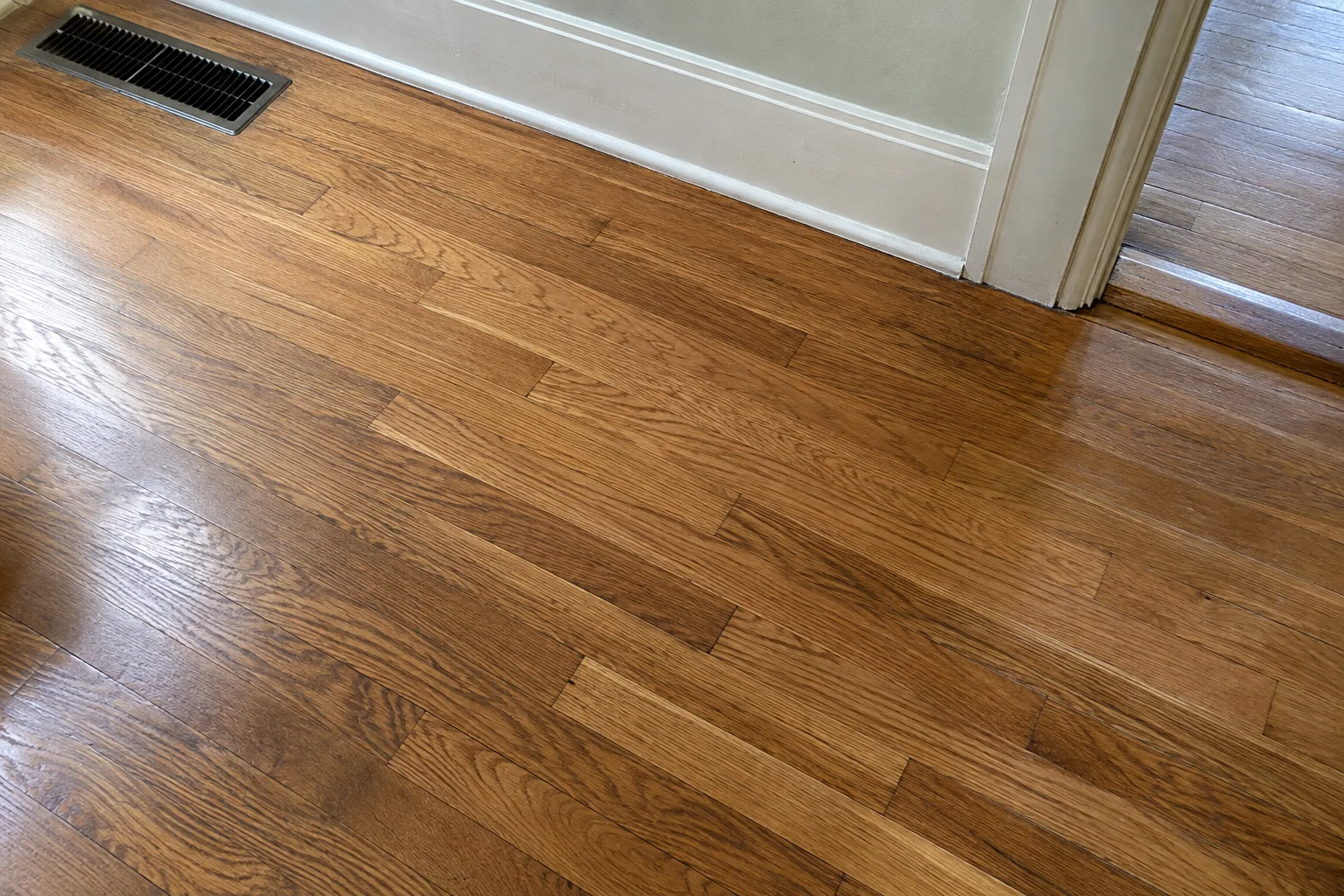
You may be able to keep most of your floor and repair the damaged area. Ask a flooring contractor to check the finish and the wood beneath it, then identify what caused the damage. Discuss whether any boards need replacement and how much of the surrounding floor needs sanding or a new finish.
Start with the kind of damage you can see
- Dullness or light surface wear: ask whether cleaning or a compatible maintenance coat could restore the surface.
- Scratches into the wood or exposed bare areas: ask whether the floor has enough remaining wood for sanding.
- A board with a deep gouge or stain: ask the contractor to compare repairing the board with replacing it.
- Raised edges, movement, or recurring gaps: describe when the change appeared and whether it changes with the seasons.
NWFA explains the difference between a maintenance coat and sanding in its refinishing guidance. Before recommending sanding, your contractor needs to check the floor's condition and remaining wear-layer thickness.
Investigate moisture before choosing the repair
Tell the contractor about appliance leaks, plumbing work, wet rugs, or changes in indoor conditions. Wood responds to moisture: cupping can develop as it gains moisture, while gaps can appear as it dries. Note whether gaps close as the seasons change or remain open. See NWFA's moisture-management explanation.
After a leak, ask who will fix the moisture source and check the floor before sanding or installing replacement boards. Ask how the contractor will confirm that the wood is ready for work; you cannot judge that from a dry-looking surface.
Check the construction and the available match
Keep any spare boards, packaging, or installation records for the assessment. Manufacturers make engineered flooring with a wood surface over other layers. NWFA compares this construction with solid wood in its guide to wood-floor types. Give the contractor your product details so they can assess whether your floor has enough wood for another sanding.
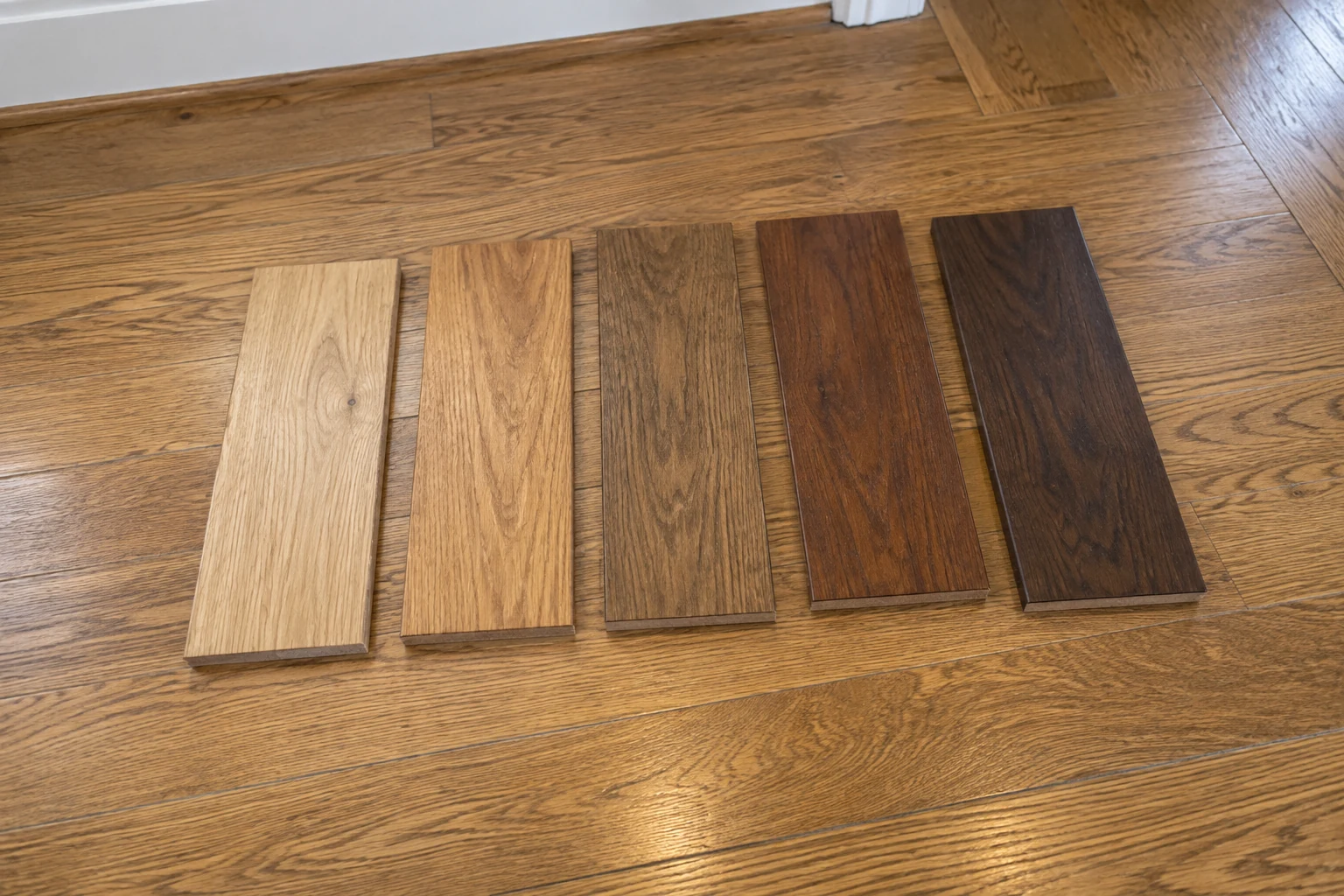
For replacement boards, discuss species, width, thickness, grain, and the existing finish. Ask to see the proposed material beside the floor. A repair can remain visible even after color matching, so agree on what level of variation you are comfortable with.
Compare the repair area with the finishing area
You might need a few replacement boards and finish work across a larger area. Ask each contractor to list the boards they will remove, repairs underneath, and the area they will sand or coat. Compare those details before comparing prices.
If you have widespread damage or your contractor cannot find suitable replacement boards, ask them to compare the repair with new flooring. For wear across a larger area, read when to refinish.
Send photos and the floor's history
Take one photo showing the room and another showing the damage up close. Include your location, when you first noticed the problem, any known moisture history, and whether you have spare boards. A contractor can use photos to understand your concern, but needs an inspection to check beneath the floor.
See our repairs and patching service or request an assessment before committing to replacing the floor.